SOLO SHOW KEES VAN DONGEN: 71, RUE DU FAUBOURG SAINT HONORÉ, PARIS 8E

HELENE BAILLY MARCILHAC gallery is honoured to present a monographic exhibition dedicated to Kees van Dongen (1877–1968), a major and singular figure in twentieth-century modern art. Born in Delfshaven, near Rotterdam, and permanently based in Paris from the end of the nineteenth century, Van Dongen quickly established himself as an independent artistic personality, asserting a vision of portraiture and colour that continued to fuel debates surrounding pictorial modernity.
Associated with the Fauvist avant-garde from 1905 onward, Van Dongen took part in the excitement of the Salon d’Automne, whose chromatic intensity earned the movement the nickname “les fauves”, coined by the critic Louis Vauxcelles.
Although he was not hung that year in Room VII, soon referred to by critics as the room of the Fauves, alongside Matisse, Derain and Vlaminck, his pictorial research was nevertheless fully part of this new dynamic. By the end of that year, his participation in the exhibition at the Prath & Maynier bookshop confirmed his attachment to the group and strengthened his ties with the leading figures of Fauvism. A few years later, Louis Vauxcelles would describe him as “one of the most terrifying Fauves” (Gil Blas, 4 March 1908), emphasizing the expressive force and radical nature of his pictorial language.
Unlike many of his contemporaries, Van Dongen cultivated throughout his life this expressive freedom of colour, refusing to submit to any form of academic orthodoxy. His painting remained a constant exploration of pictorial emotion and human presence, driven by an immediately recognizable chromatic intensity.
Van Dongen was not only Fauvist in his manner of painting. He was also a painter of modern life, of the city and of the social world. His work reflects the vitality of Parisian life, between Montmartre and Montparnasse, and bears witness to cosmopolitan impulses, festivities, literary cafés and evenings where writers, artists and figures of society mingled. His art offers a portrait of Paris from the 1900s to the 1930s, marked by unabashed sensuality, chromatic boldness and a keen sense of portraiture, which earned him particular recognition both among high society and a wider public.
Art historians often emphasize that Van Dongen “raises colour to an expressive power that goes beyond simple representation”, making his work an essential point of reference for understanding the dynamics of modern portraiture. His female figures, associated with elegance, emancipation and a form of psychological complexity, capture both the spirit of an era and a more intimate dimension of the gaze.
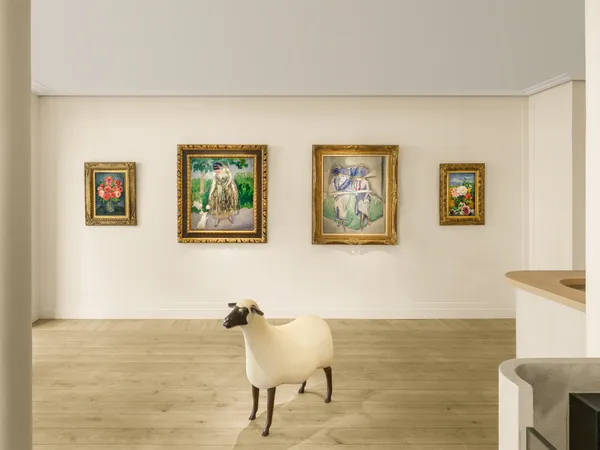
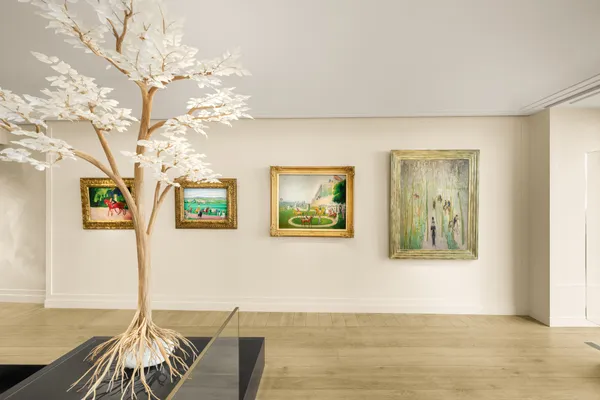
At HELENE BAILLY MARCILHAC gallery, we are particularly proud to present several key works from this singular journey, offering insight into the many facets of his practice, from early Fauvism to society portraits. This monographic exhibition thus provides a rich and nuanced reading of an artist who remained profoundly “Fauve” in spirit as well as in his use of colour throughout his career.
 CHAT ON WHATSAPP